Story Theme

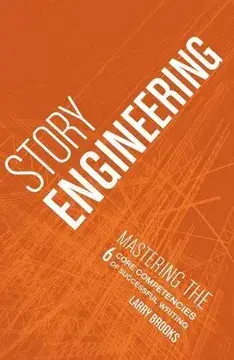
In his book, Story Engineering: Mastering the 6 Core Competencies of Successful Writing, Larry Brooks writes, “Theme is what your story illuminates about real life.” A story’s theme reflects a universal truth. It compels readers to engage with your story, stimulates their intellect, touches their hearts, and elicits a soul-deep response. A well-crafted theme makes people remember and cherish your story.
In The Anatomy of Story: 22 Steps to Becoming a Master Storyteller, John Truby writes, “Theme is the story’s moral argument.” Through theme, the writer either explores an issue’s various aspects or seeks to persuade readers of a point of view. Truby outlines three techniques for conveying theme: force the hero to make a moral decision; create a cast of characters who represent variations on a moral question; or place two main characters in conflict over a moral dilemma.

In Writing Your Story’s Theme: The Writer’s Guide to Plotting Stories That Matter, K. M. Weiland explains how three craft elements circle, bleed into, and feed off one another: theme, character, and plot.

Since romance generates positive-arc stories, I will focus my discussion on them. However, Weiland discusses positive, flat, and negative-arc stories in her book. An example of a negative-arc story is Michael Corleone in Mario Puzo’s The Godfather. Flat-character-arc stories, such as John Irving’s The Cider House Rules, often explore an issue without delivering a definitive opinion at the end.
In a positive-arc story, the narrative begins with the protagonist believing a lie, the antithesis of the truth or the theme. The protagonist’s fatal flaw is believing this lie. The lie makes the story possible. By the end of the story, the lie must be replaced by the truth. The character must grow or change in a positive way, and this new understanding must change the character’s life moving forward. The lie is the opposite of the truth the protagonist must learn. The truth, drawn from universal consciousness, is the theme.
Some people say you don’t need to know your theme before you start your story, but I disagree. I believe you need to know and understand the theme you are exploring before creating your plot outline and characters. I don’t know how anyone can write a book without knowing their theme. Some folks say writers write about the theme of their life and may not even know it. Now, that I get. But even that writer knows the theme before they begin. The writer may not consciously label the theme, but they know it subconsciously. It guides them, manuscript after manuscript.
Joyce Carol Oates, an incredibly prolific and talented literary author, says, “Know your ending before you begin.” If a novelist knows how the story ends, which lie is reversed to the truth, and what change occurs in the protagonist, then the novelist knows the theme and can start the book with the lie.

For example, if the novel ends with the protagonist learning that self-respect brings contentment, the story must begin with the protagonist living a lifestyle that lacks self-respect and contentment. At the novel’s midpoint, the protagonist needs to look into the mirror and think, “Maybe I can only earn contentment in life through practices that build self-respect.”
As Weiland says, theme, character, and plot feed off and bleed into one another.
Plot is the external action or conflict—what happens in the story’s scenes—and is mental. This leads to that, which escalates into this other, etc. The text of the story. The framework or architecture through which the story is built and through which the character encounters external challenges. Think of it as the mind, the map of the story that facilitates the character’s change from lie to truth. What types of events must logically occur to facilitate thematic change?
Character arc represents inner conflict and is conveyed through context. Context is the backstory, setting, description, and surrounding circumstances that help readers understand the text and plot. Think of the character as the heart or emotion of the story, the inner landscape of the human being who will convert the lie to truth. Inner changes are revealed to readers during the intimate, slower-paced parts (sequels) of the story.
Theme is the soul of the story. It is subtext. It is vast and abstract. It is the unifying principle or idea that resonates with universal truth.
The theme should appear—in some form—on every page and in every scene. It must be present to create a unified experience and a fleshed-out, meaningful, and memorable story that resonates with readers.
I think of it as solid, liquid, and gas, such as ice, water, and vapor, and all the many permutations in between: ice, ice melting into water, ice in water, slush, sleet, cold water, warm water, hot water, boiling, water vapor or steam, humidity. And every imaginable mixture. Carbonated water. Sometimes it freezes and takes a solid, tangible form. It’s icy. It bites. Sometimes it melts and seeps into crevices and interstices, washing or rinsing other elements. There, but not as obvious as the rock it washes. Sometimes it evaporates, and you can’t see it at all, but it’s there. Like a ghost. Sometimes it sublimates from ice to vapor, there one moment, gone the next, seemingly disappearing. But in the author’s mind, it is always present.

You can also liken the theme to music. Music grows louder and faster, or softer and slower; it swings through many melodies, rises and falls, and undulates. It changes form and imbues subtle nuances, all of which engage the ear. A variety of sounds is far more enthralling than repetition. Discordant rhythms exist, but should not dominate the structure, lest the ear grow tired.
Beautiful. Powerful. Mysterious, even.

Weiland discusses delving deeper to uncover your story’s thematic principle. If self-respect is your one-word theme, the thematic principle of your story might be “contentedness in life can only be achieved through acts that build and maintain self-respect.” Another story about self-respect may have a different thematic principle that guides the writer throughout, such as “self-respect and/or self-love comes before the ability to love another.” Different stories, different thematic principles, right?
Defining your thematic principle tightens your story and adds specificity to your characters and plot.
Let’s say your protagonist’s older brother, John, died in the Battle of Waterloo. John was a respectable, responsible, upstanding guy. Now Tom, the protagonist, is grieving. In post-war Regency England, he drinks, parties, and visits prostitutes. Why not? Why be responsible? What did it get poor John? Nothing good. Tom’s lie: Why be responsible? Being upstanding and duty-bound killed John. Fuck responsibility.
Tom’s recently widowed mother longs for him to return to himself. His sister fears that with her father and John’s deaths, the family is doomed to penury if they must rely on Tom, who is dissolute and hedonistic. The love interest fears she cannot marry a wastrel.
Tom must stop drinking, manage the household’s affairs, and satisfy the woman he loves. He must learn that meeting the responsibilities set before him builds self-respect, and with self-respect, he can find contentment.
The protagonist, Tom, has a need and a want. The “want” is a plot-advancing desire, usually steeped in the lie. Tom wants to party because what good does being responsible do for you? The “need” is the antidote to the character’s inner pain. The need is the theme, the story’s truth. The “want” (partying) sustains the “lie” (eschewing responsibilities). The “need” (self-respect) represents the character’s path to recovery, change, and growth. Choosing the lie over the truth always deepens the character’s suffering.
The theme is the “Why?” Why does he believe this? Why can’t he change? Why does flipping the lie into the truth matter? The plot is the “How.” How does he change? What events must occur to drive that change?
Weiland also distinguishes between theme and message. The theme is a broad, universal truth, such as self-respect leads to contentment; the message is a specific example of the theme in action, such as Tom needs to quit drinking and take his responsibilities seriously, or he will never achieve contentment. The theme is inclusive and applies to everyone. The message, or moral, is exclusive and applies to a specific character.
No reader wants the theme shoved down their throat by a wagging-finger schoolmarm. Readers don’t want to be told what to think. The writer must show, reveal, and deliver the theme, not tell it. By the end of the story, the theme’s power should resonate with the reader. The reader may not even be able to name the theme. The reader may not leave the story with the same feelings or intentions that guided the writer. That’s where art comes in. People experience different perspectives. The best novels provoke a range of thoughts and emotions.
Side characters often represent a facet of the theme. Antagonists typically embody the theme’s negative charge. Let’s say Tom’s buddy, Roger, has always partied, will always party, and is a wastrel without hope. Roger embodies the theme's negative charge. Scenes in the novel should depict Roger’s alcoholism leading to calamitous, self-destructive situations. Or not; maybe Roger rarely faces consequences. Maybe he has an enabler.
A love interest is often the “impact character.” The love interest guides the protagonist by drawing them toward the truth with positive responses and pushing them away from the lie with negative ones. For example, when the protagonist is steeped in the lie, the love interest wants nothing to do with him. But when the protagonist makes strides toward the truth, the love interest rewards him.
A positive character, such as Tom’s mother, Agnus, always embodies strength and duty. She is like her son, John. She is a pillar of self-respect and knows she will be content with herself regardless of the family’s financial situation. If she needs to take control of the situation, she will.
Not every story needs to be structured like this example. Stories vary widely and are compelling in their own ways. This is merely an example to underscore the value of understanding your theme and thematic principle before you begin. Knowing the story’s theme helps a writer craft a logical plot and compelling characters.


Comments